
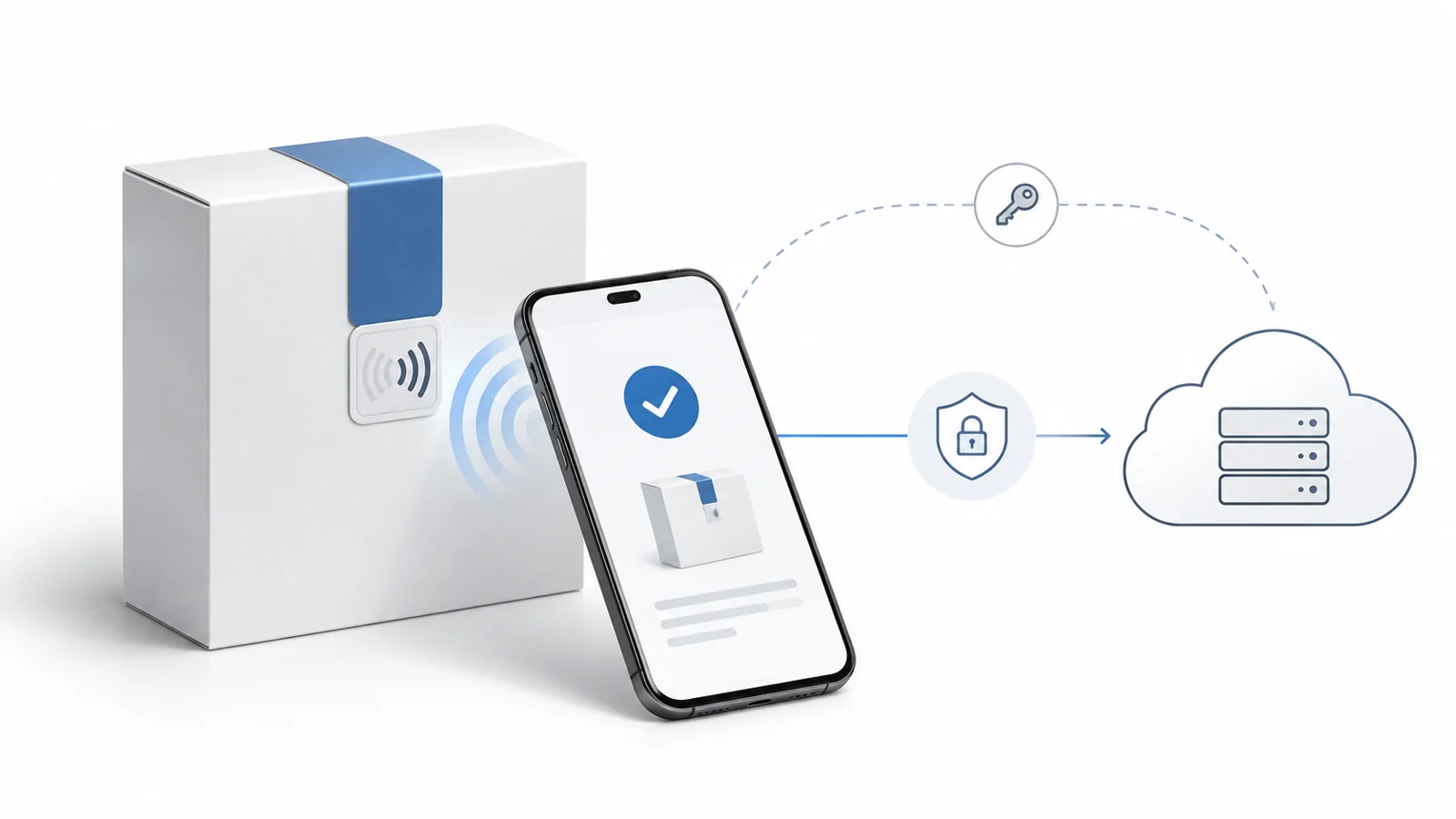
Why static identifiers are not enough
A printed QR code or ordinary NFC URL can be copied to another package. A database lookup can confirm that an identifier exists, but cannot prove that the original chip generated the tap.
A secure NFC design adds cryptographic verification, controlled issuance and a product-to-tag binding. It raises the difficulty of copying a valid consumer-facing authentication experience.
How the solution works
- Select a tag or label construction that suits the actual product and packaging.
- Personalize NTAG424 DNA with approved AES keys, file settings and an SDM-enabled NDEF URL.
- Register an issued chip reference against a product, serial number or batch in your system.
- A consumer taps the tag; the phone opens the dynamic URL and sends the relevant data to a backend.
- The verifier checks the cryptographic message and applies counter, status and business rules before showing a result.
What you can implement
- Custom printed NFC labels, cards or embedded tags
- Secure batch personalization and issuance records
- Product identity binding and lifecycle management
- Server-side SDM/SUN verification and branded authentication pages
- Integration with existing ERP, CRM or product databases
Design and security considerations
Authentication proves that the expected chip-generated data passed verification under the configured keys. It does not independently prove the contents of a package or prevent physical tag transfer.
Key protection, replay handling, label placement, product binding and operational controls are all part of the complete solution. For seal integrity, evaluate TagTamper and the physical label construction.
Start with a pilot
Share your product type, intended tag placement, annual volume, desired consumer experience and existing backend environment. A small pilot should validate read performance, issuance, verification and product binding before scale-up.