
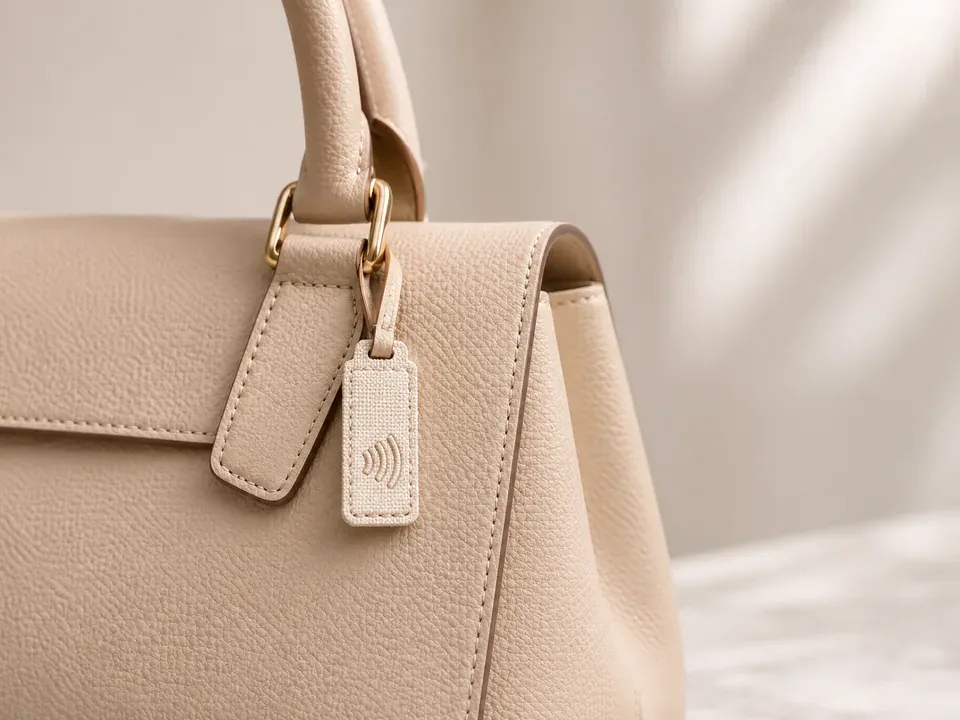
The challenge for luxury brands
A copied QR code or serial number can lead to a convincing product page without proving that the original item was scanned. Luxury brands need a discreet way to connect a physical product to a controlled digital identity.
The tag must fit leather goods, textiles and small accessories without changing the product design or customer experience.
Recommended NFC construction
- Discreet fabric labels or inlays integrated into linings, patches or internal compartments
- NTAG 424 DNA with SDM/SUN for cryptographically verifiable tap messages
- Factory issuance with controlled AES keys and serialized product-to-tag registration
- Branded verification pages with optional warranty, care and ownership services
From factory to authenticated handbag
- Prototype the fabric label or inlay in the final handbag materials and test smartphone reading.
- Personalize tags with the approved key profile and SDM URL configuration.
- Bind each issued tag reference to a specific product or serial in the brand backend.
- Install and inspect the label during production, recording the binding and quality checks.
- Verify the dynamic tap server-side before displaying approved product information.
Practical integration considerations
Metal hardware, zippers, foil linings and thick material layers can affect read performance. Evaluate tag location with representative phones before finalizing the construction.
A hidden NFC label can be physically removed or transferred if the attachment is not designed to resist it. Cryptographic authentication establishes the chip message under the configured keys, not an unbreakable physical bond to the handbag.
What to define for a pilot
- Product type, lining material and intended NFC placement
- Label dimensions, print or fabric finish and expected production volume
- Brand verification journey, product data fields and warranty or ownership requirements
- Issuance ownership, key-management model and integration API requirements