
Business challenges
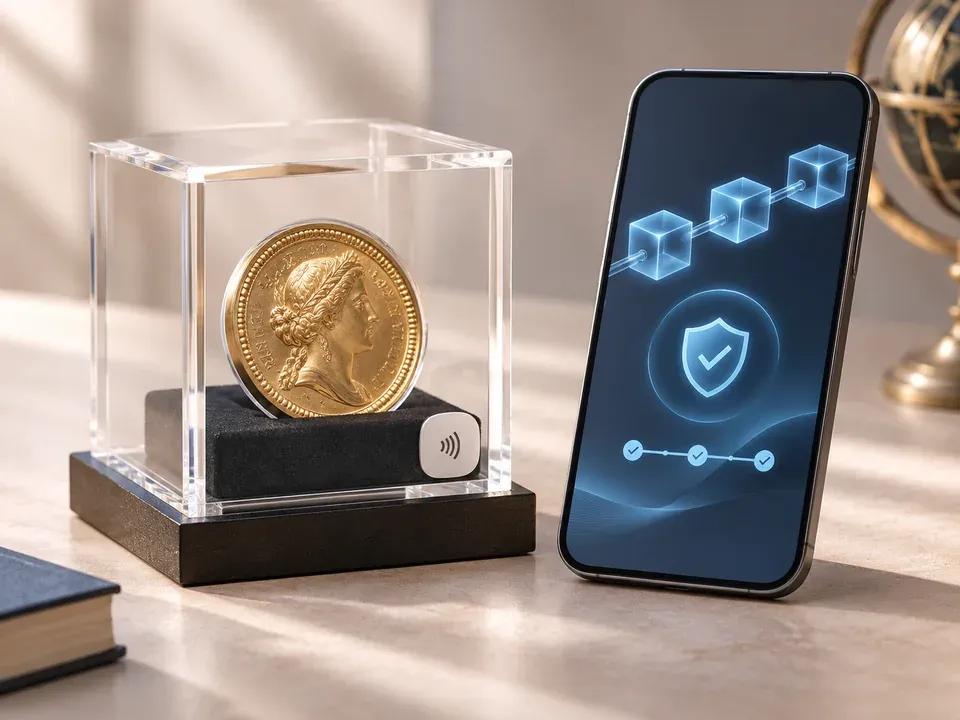
Tokenized coins, watches and cases need a trustworthy link from the object in hand to a record in software. A QR printed on packaging can be copied; a wallet screenshot is not evidence that this item was tapped.
How secure NFC helps
- Chip-bound identity on the case, capsule or certificate, not only on a website
- Server-side SDM/SUN verification before a registry or token reference is shown
- Issuance that writes keys under access control, then binds UID to your asset record
Architecture notes
NTAG 424 DNA does not run a blockchain. The chip supplies a tap-unique message; your verifier decides whether to release a token ID, custody record or product page. Do not imply on-chain settlement from a successful NFC read.
Binding and verification workflow
- Define the physical asset and authoritative registry record.
- Select a tag construction and physical attachment appropriate to the object.
- Issue the NFC chip under controlled keys and bind its reference to the asset.
- Verify dynamic tap data before resolving a registry or token reference.
- Handle transfers, revocations and re-issuance in the registry governance process.
Trust boundaries
A valid NFC tap cannot establish legal ownership, custody or the truth of an external blockchain record. A genuine tag may also be physically transferred unless the attachment and inspection design address that risk.